

Anand Giridharadas is the author of “India Calling: An Intimate Portrait of a Nation’s Remaking,” which will be published by Times Books in January, 2011. He writes the “Currents” column for The New York Times and its global edition, the International Herald Tribune: it explores fresh ideas, global culture and the social meaning of technology, among other subjects. A native of Cleveland, Ohio, and a graduate of the University of Michigan, he worked in Bombay as a management consultant until 2005, when he began reporting from that city for the Herald Tribune and the Times.

Ashwini Chidananda Shetty Akkunji is an Indian sprint athlete from Udupi district in Karnataka, India. Ashwini, who specializes in 400 metres, won gold medals in the 4X400 m relay at the 2010 Commonwealth Games in New Delhi, India, and the 2010 Asian Games at Guangzhou, China, and an individual gold medal in the 400 metres hurdle in China. Born in a village to farmer parents, Ashwini grew up on a farmland of arecanut plantations, often running around barefoot.

Ayah Bdeir is an interactive artist and a graduate of the MIT Media Lab. Bdeir’s work has been exhibited at numerous venues including The New Museum, Ars Electronica and Location One. Bdeir has been awarded fellowships with Eyebeam and Creative Commons, and has taught graduate classes at NYU and Parsons. Bdeir was a mentor in the reality tv-show Stars of Science promoting technology innovation in the Middle East. Bdeir works between Beirut and New York. In 2011, Ayah Bdeir received the highly prestigious TED Fellowship which includes an invitation to give a talk at the TED event in Long Beach in 2012.
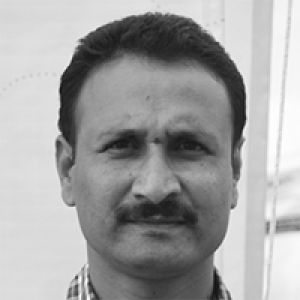
Making the adage, ‘necessity is the mother of all inventions’, ring true is C Mallesham, who, moved by his mother’s suffering, innovated an automatic loom, that is also reviving the dying tradition of the Pochampally silk sari weaving. Laxmi Mallesham is now perhaps the happiest mother in Sharjipet, a village of handloom weavers in Andhra Pradesh. She, and many women weavers, is now free from pain and stress that consumed her for hours on the manual loom.

Chakshu Roy heads technology initiatives at PRS Legislative Research (PRS), New Delhi. PRS is a unique initiative that provides non-partisan analysis to all Members of Parliament in India. Chakshu is developing a comprehensive technology strategy to engage large sections of the population in the policy process. He has conceptualised and developed India’s only online database of all state laws. Chakshu has conducted capacity-building workshops for over 1000 journalists on tracking the work of legislators.

Guillermo Rivero was born in Puebla, Mexico. He studied International Relations and Transatlantic Studies specializing on cultural institutions as pivotal elements to create supranational identities. In 2008, Guillermo and his partners started developing Pase Usted, a project that aims to create a collective knowledge of positive ideas that would benefit Mexican society with creative solutions. Always from a multidisciplinary standpoint Guillermo aims to create a movement that would make Mexico a better place to live in.

Ishita Chaudhry is the Founder & CEO of The YP Foundation (TYPF). TYPF enables young people to create programmes and influence policies in health, education, gender, sexuality, and the arts and governance, reaching out to 300,000 young people in India. Ishita works with youth communities on developing leadership skills and enabling their access to sexuality education. She has received the ChangeLooms Award (Ashoka Foundation 2008), Seen&Heard British Telecom Award 2008, Karamveer Puruskaar 2007 and the President of Nepal’s Young Achiever’s Award, 2009.

Joi Barua is a musician from Assam, India who fell in love with music at the age of four, after his father gifted him a violin. Growing up, his town had one piano and no music teachers, and his father had to cross the border and get him a keyboard from Bhutan. Since then, Joi has been making waves in the advertising, music, and film circuit in Mumbai with his musical stylings and melodious voice. He is also the lead vocalist of the band Joi and has a mixed musical style incorporating elements of rock, soul, jazz, folk and world music.

Madhu Acharya is one of the key founding members of Antenna Foundation Nepal and served as its Director from 2006 to 2010. Antenna (est. 2002) is a vibrant production and training facility catering local and community radio stations in Nepal. Madhu’s pioneering work includes introducing mobile radio-Doko Radio into remotes villages of Nepal. He began his career as one of the founding producers of Radio Sagarmatha in 1996 and worked there for five years. Madhu, as a Knight Fellow 2010-11 at Stanford University, is studying share-casting, two-way communication, as a tool for development and democracy.
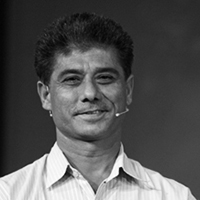
Mansukhbhai R Prajapati was born in Nichimandal village in Gujarat in a family of potters and terracotta craftsmen. Being the eldest among four siblings, he became the helmsman of his family and its craft legacy. Despite financial constraints, Mansukhbhai’s parents managed to educate him till high school. Mansukhbhai has developed an entire range of earthen products for daily use in the kitchen. These products include water filters, refrigerators, hot plates, cooker and other such items of daily use.

Mushtaq Ahmed Dar is a 28 year old serial innovator. He started inventing his own tools when he could not take his exams and study beyond the 10th standard due to the untimely death of his father. Mushtaq has developed a series of innovative tools, including a walnut cracker, a device to climb electric poles and trees, a machine to crack almonds, a plastering machine, and a seed broadcaster and sprayer.

Nachiket Udupa graduated as a Civil Engineer from IIT Guwahati after which he worked for a year as a Derivatives Trader. Subsequently he worked for a year at a non-profit in Bangalore and then did his Masters in Education Leadership from Teachers College, Columbia University. For the past few months he has been volunteering with the Mazdoor Kisan Shakti Sangathan. In the long term he plans to work on agricultural cooperatives, education and health.
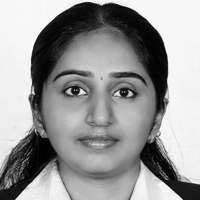
Remya Jose, all of 23 years from Malappuram in Kerala, is a gifted innovator, with a number of path-breaking innovations to her credit. The washing-cum-exercise machine that she developed received a National Award from former Indian President Abdul Kalam. The idea for the machine came to her as washing clothes was a tiresome chore and her family could not afford a regular washing machine. Remya works at National Innovation Foundation, Ahmedabad, and is responsible for many other innovations.

Sachin Malhan is the co-founder of Inclusive Planet, which is working to enable online collaboration amongst the world’s print-impaired population. Before Inclusive Planet he co-founded two ventures in the education space – Law School Tutorials, the leading law test prep outfit that became an ISB case study in 2009, and Rainmaker, the leading talent advisory firm for the legal industry and manager of India’s Bar examination. In his ventures Sachin has worked intimately with technology and young people, and discovered the joy of teaching. Sachin is a graduate of the National Law School in Bangalore.

Shilo Shiv Suleman is an Indian illustrator, animator and visual artist based in the city of Bangalore. Her primary area of interest is visual storytelling through multiple mediums. She illustrated her first book for children at the age of 16 and has illustrated eight others since with some of the most well known publishing houses in India. She has also been actively involved in setting up community art projects and collectives that get people to appreciate and create street art in their surroundings as well as use art and design to bring socially relevant issues in India to the forefront.
She is currently working on creating interactive narratives for children on the iPad called Khoya, an experiment with the links between magic, earth and technology as well as the potential that touch has as a new integral part of storytelling. It attempts to use new and mobile technologies like Augmented Reality and the iPad to bring out the fantasy in an Indian contemporary story and create interactions that make you actively seek out natural environments.
Earlier this year she was chosen by TED and Levi’s as an ambassador of the shape of things to come – one of three Indian women to be felicitated with this honour at the TED Global Conference 2011, Edinburgh. In 2010 she was selected for an INK Fellowship for her work as a young innovator in her field and now continues her work with the INK community.
In her spare time Shilo gypsies around the country, driven by Love, magical realism and everything that shimmers, pressing flowers between the pages of her many notebooks while losing herself in watercolor wonderlands.
WEBSITE
Samples of her work are available at http://www.shiloshivsuleman.com

Shivam Sai Gupta is a 14 year old student of Class nine in St. Mary’s school, Patna, Bihar. He develops games, 3D animations and Visual effects. After the Mumbai Terror attacks on 26/11/2008, he was so disturbed that he began developing a first person 3D shooter game called ‘Project Fateh’. Without any formal training in programming, Shivam built the whole game in 8 months, braving constant body pain due to a rare genetic disease, and has today launched the game as a free download.

Sophie Morgan was born in the south of England, then educated in Scotland, before she returned to study at the University in London, where she now lives and works managing her own company. She is a product designer, a television presenter, a model, a campaigner, an artist and, as a result of a car accident seven years ago, a paraplegic wheelchair bound for life. Her work is centered on changing how disability is perceived and considered within society.
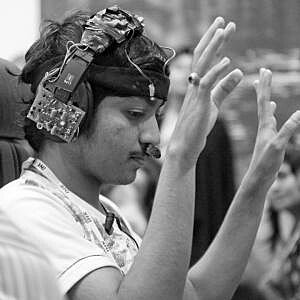
A highly motivated young innovator, Susant Pattnaik from Bhubaneshwar, Orissa, is helping differently-abled individuals with his range of innovations. The ‘Breathing Sensor Apparatus’ assists physically challenged people to operate an electronic wheel chair that uses changes in the breathing. Through this technology, they can even type messages in a specially designed cell phone for better communication. The National Innovation Foundation and Techpedia have filed for a patent for his invention.

Ugesh Sarcar is India’s first and only contemporary and revered street magician. Ugesh was trained in the art of magic under the stewardship of his father – the “Living Legend” Prof. M. C. Sarcar. Thereafter, “Ugesh Sarcar’s 3rd Degree,” his first national TV appearance, became an instant hit and the highest rated show for the channel in over 3 years. There has been no looking back ever since, and his performances have won him accolades the world over

Vinay Gidwaney is a co-founder at Energy Inside which is creating space in society for well-being through its products, DailyFeats and pepfly, both of which help people build healthy behaviors and emotions into their lives. Previously, Vinay was a researcher at the MIT Media Lab working in the field of optogenetics. Vinay also co-founded a software company that was acquired by CA in 2005. In 2002, he was recognized as one of the Top 100 Innovators under 35 by MIT Technology Review.