



He was a speaker at the inaugural INK conference in 2010 and was thrilled by the array of inspiring, creative, humble, brilliant, warm, friendly people who are brought together at INK.


Seeing Adora walk down the street, you might not think that the seemingly typical thirteen-year-old is a published author, activist, accomplished speaker and one of the world’s youngest teachers.
With many roles, Adora leads many lives. Many wonder how she got those roles in the first place. What people may not know is that Adora has had years of practice—half her life, in fact. As one of the world’s youngest teachers, she’s spoken to over 400 schools and classrooms worldwide. Called a “tiny literary giant” by Diane Sawyer, Adora is the author of two books, Flying Fingers and Dancing Fingers.
Her TEDTalk, ‘What Adults Can Learn From Kids,’ was widely watched around the world.
UNTOLD STORY: When Adora Svitak speaks on stage, you may not realize that the thirteen-year-old is the same girl who hunts for free food, rolls her eyes at her parents, or debates with her sister regularly.
WORKS: Flying Fingers, Dancing Fingers
WEBSITE: www.adorasvitak.com

With a wide range of passions including music, poetry, and art, Adrianna Svitak studies piano and violin as well as singing.
Her musical interests range from Michael Jackson to Mozart, Beethoven to Beyonce. Nine years of practice have led to awards from events, including the Seattle Young Artists� Festival, the Performing Arts Festival of the Eastside, the Music Teachers� National Association and the Bach Festival competition. In violin, her accomplishments include being named Concertmistress for the Redmond Junior High Honors Orchestra as well as the Junior All-State Orchestra.
Untold Story
Adrianna co-authored Dancing Fingers, a volume of poetry, with her sister Adora. Her poem �Minnie� was inspired by her pet guinea pig of the same name.

Alexander is a renowned technologist, artist, journalist and author. As an artist and technologist, he has participated in developing scientific visualization software to enable him to “paint” the anatomy using volume data.
Alexander taught himself mathematics and physics and developed his own lenses, including one for a microscope that was used to photograph the first images of human eggs in an in vitro fertilization program. The images resulting from this became cover stories for Life Magazine.
UNTOLD STORY
At the age of 19, Alexander returned to his parents’ village and spent a year herding 2,000 goats from the Macedonia Albanian boarders down to his mother’s village near the base of Mount Olympus, where he remained to produce his first book, Death Rituals of Rural Greece. Later, he also trained for the Olympics in the 400 meter intending to run until the boycotts of the Moscow Olympics.
NEWEST ENDEAVORS
Alexander has started a new website called TheVisualMD.com where he is using real scanned data and his skills as an artist, story teller and technologist to tell visual stories of the marvels of how the human body is designed, when things go wrong and compellingly explain pathways back to health.
WORKS
Death Rituals of Rural Greece; From Conception to Birth; Architecture and Design of Man and Woman; Guide to Lifeblood; Guide to Sexual Health; Guide to a Healthy Heart; Body Voyage
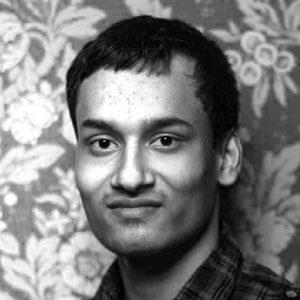
Named the ‘youngest headmaster in the world’ by BBC in October 2009, at the age of 16. Babar Ali is an Indian student and teacher from Murshidabad, West Bengal. He started a school, Ananada Siksha Niketan – Home of joyful learning, in his backyard when he was just 9-years-old, now with 300 regular students. It is an outdoor school and counts a total of 10 teaching and non-teaching staff who are providing their voluntary service. There are no tuition fees, thus making it affordable for the poor in this economically deprived area and thereby helping increase literacy rate there.
In 2009, Babar Ali won a prize from the program Real Heroes of the Indian English news channel CNN IBN for his work and was awarded the NDTV ‘Indian of the Year’ award. His story became a part of the syllabus for the CBSE 10th standard English textbook, PUC English textbook for Govt. of Karnataka, and also in a curriculum in Luxembourg, Europe. He was featured on Aamir Khan’s TV show Satyamev Jayate in July 2012
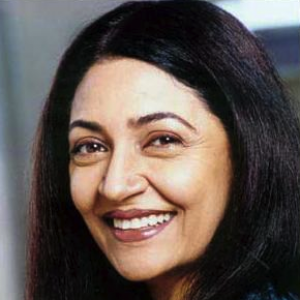
Deepti Naval is an artiste in the true sense of the word. Deepti is an acclaimed Indian actress who migrated to the US for university. She debuted in the Hindi movie, ‘Ek Baar Phir’ (1979), and has acted in over 60 films, including ‘Mirch Masala’, ‘Main Zinda Hoon’, and more recently, ‘Leela’. She wrote and directed ‘Thodasa Aasmaan’, a TV serial about women, produced a travel show, and made her directorial debut with ‘Do Paise Ki Dhoop, Chaar Aane Ki Baarish’. ‘Lamha-Lamha’ was her first poetry compilation, followed by ‘Black Wind and Other Poems’. Coming up is a poetry collection from wanderings in Ladakh. She runs the Vinod Pandit Charitable Trust, in memory of her late companion, for the education of the girl child.
Untold Story
Deepti is a seeker of beauty, an explorer of wilderness. She is a professional painter and photographer and enjoys trekking in the remote mountains of Himachal and Ladakh.
Books: Black Wind, Lamha-Lamha

Originally a professional musician and circus clown, Derek Sivers created CD Baby in 1998. It became the largest seller of independent music online, with $100M in sales for 150,000 musicians. In 2008, Derek sold CD Baby for $22M, giving the proceeds to a charitable trust for music education. He is a frequent speaker at the TED Conference, with over 5 million views of his talks. In 2011, he published a book which shot to #1 on all of its Amazon categories. Derek Sivers lives in Singapore, where he is creating his next company.

Gayatri Ganjawalla is a classically trained vocalist both in Carnatic and Hindustani styles and is currently training under the tutelage of Pt. Shri Babanrao Haldankar. She was the first Indian woman to play the leading role in the London West End musical The Far Pavilions where her acting and singing abilities received critical acclaim. Gayatri has sung for several Bollywood films and in regional languages. She travels extensively, either as a solo performer or with her husband, multiple award winner Kunal Ganjawalla.
UNTOLD STORY: In school, Gayatri wanted to be an astrophysicist. Her high point was when she won a book on how to make a telescope. She was also a national level volleyball player but didn�t grow tall enough to continue the game.

James Sebastiano is a documentary filmmaker. He He has spent the last 3 years exploring the root causing of anxiety and mental health issues which has resulted in the making of ” Chasing the Present”. In addition to filmmaking , he is also a marketing expert, conscious entrepreneur, passionate about ethical and environmentally sustainable business and is currently studying psychology.
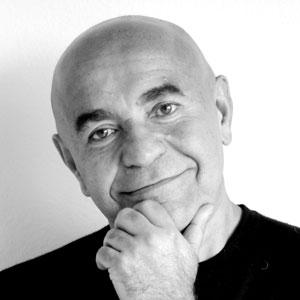
Kamran Elahian is Chairman of the BIT-AMENA Center for Building Innovation Economies at the Haas School of Business at UC Berkeley. As an entrepreneur, Kamran co-founded ten companies, of which three failed and six produced a total market cap of over $8B. As a VC, Kamran co-founded Global Catalyst Partners with investments in the U.S., Japan, China, India, Israel and Singapore. Underlying his global vision is the conviction that modern ICT can be instrumental in dissolving barriers between nations and bridging the social and political differences among people. As an innovation catalyst, he advises various governments on the needed transition from fossil based economies to sustainable innovation economies
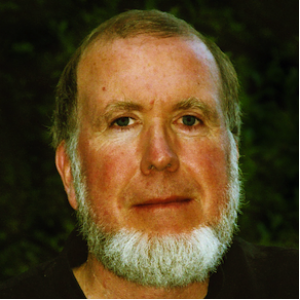
Kevin Kelly is Senior Maverick at Wired magazine. He helped launch Wired in 1993, and served as its Executive Editor for its first seven years. From 1984 to 1990, Kelly was publisher and Editor of the Whole Earth Review, a journal of unorthodox technical news. He co-founded the ongoing Hackers Conference, and was involved with the launch of the WELL, a pioneering online service started in 1985. He is also a charter board member of the Long Now Foundation, which is building a monumental clock to tick for 10,000 years. He is currently Editor and Publisher of the popular websites Cool Tools and The Quantified Self. His newest book What Technology Wants was released in October, 2010.
UNTOLD STORY: Kevin’s first job as a kid was at the local library. It was the only job he should have been fired for; instead of working he would hide in the stacks reading old magazines.
BOOKS: What Technology Wants, Out of Control, New Rules for the New Economy
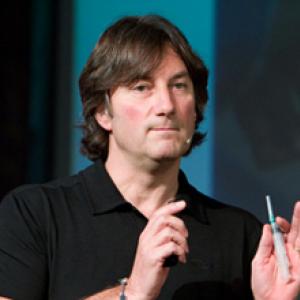
The alarm bells first rang back in 1984 for Marc when he read a newspaper article predicting the spread of HIV through re-using medical syringes. Appalled at the prospect of such an avoidable catastrophe, Marc decided to do something about it. Some 26 years later his solution the K1, an Auto Disable (AD) syringe, not only physically prevents re-use, but can be manufactured inexpensively, by using existing machinery and is now under license to 14 global manufacturers. Conservative estimates credit Marc with more than five million lives saved and 10 million diseases prevented. In 2006, after realizing that simply manufacturing a safe product was not enough, he identified a gap in the market between producing a product that would save lives and a lack of knowledge of the benefits such a product can bring. He established The SafePoint Trust, a UK based not-for-profit, that produces hard-hitting, public information films. Marc now spends all his time working with SafePoint lobbying for legislation change at government level, spreading public awareness and ensuring adequate healthcare worker training is in force to complete the changeover to a safe healthcare system.
WEBSITE: www.marckoska.com, www.safepointtrust.org

Raghava KK is a renowned Indian artist and a tech entrepreneur, named by CNN as one of 10 most remarkable people in 2010.
He was inducted into the National Geographic Society as an Emerging Explorer for bringing together science, art, and technology in the field of exploration in 2013 and he recently wrote the foreword for Mass General Hospital’s textbook on psychiatry, in which he discusses the importance of cultural sensitivity, perspectives, and empathy in psychiatry
A four time TED speaker, his iPad art book Pop-it, launched at TED, shakes up the concept of the ideal family and presents children with multiple perspectives at the earliest stage. The book won several awards, including a Best of 2011 award from Kirkus.
Currently, he is the CEO and co-founder of Flipsicle, a tech startup out of New York and Sweden, which brings together creativity, technology, and empathy.
UNTOLD STORY: As a school kid, Raghava used to perform magic shows at children’s birthday parties to earn pocket money.

Raghu Dixit is a unique and popular composer, song-writer & singer from India. His music is a seamless amalgamation of ethnic music and styles from across the world. His lyrics, though intense, are simple and speak about every common man�s emotions and experiences. Inserting Indian ethnic folk, Sufi and classical music phrases cleverly into his songs, Raghu�s singing style can be described as unique. Being a completely self- taught guitarist and singer, his vocal range and versatility has been appreciated with awe and has become one of the most recognizable voices in the country!
UNTOLD STORY: Raghu is a gold medalist in Masters in Microbiology from the prestigious University of Mysore and a professionally qualified Indian classical dancer.

Dr Susan Lim is the current Co-chair of the Global Advisory Council of the International Society for Stem Cell Research (ISSCR). At 35, she broke through the gender glass ceiling in transplantation surgery and became the first in Asia, and the second woman in the world to have performed a successful cadaveric liver transplant. Since then, Susan’s desire to discover that next big thing has kept her actively focused on robotics and stem cell research. She strongly believes that as society increasingly embraces technology, communication and interactions will extend beyond humans to robots and other inanimates.

While most kids were grappling with the realities of growing up, Vishal took a head start and started his first company – FACT, soon after finishing school at the ripe young age of 16.
In 1999, he founded Indiagames, then a five member team and today a global operation with over 300 employees and offices in Mumbai, Beijing, London and Los Angeles making Indiagames one of the leading mobile game companies globally. He is recognized as being instrumental in starting and growing the Gaming Industry in India. He sold Indiagames to Disney and headed the Digital business for Walt Disney in India before starting his new venture GOQii Inc. that integrates wearable technology with personalized coaching.

Anil Ananthaswamy is a consultant for New Scientist in London. He has worked at the magazine in various capacities since 2000, most recently as deputy news editor. He has also contributed to National Geographic News and The Independent (UK). He studied electronics,electrical and computer engineering at the Indian Institute of Technology, Madras (Bachelor of Technology), and the University of Washington, Seattle (Master of Science), and worked as a software engineer in Silicon Valley before training as a journalist at the University of California Santa Cruz. He is the author of The Edge of Physics, published by Houghton Mifflin Harcourt (published as The Edge of Reason by Penguin, India).
Untold Story
Anil attributes his interest in cosmology to a thin, dog-eared copy of Lincoln Barnett’s The Universe and Dr. Einstein, which he picked up one night as a cure for insomnia, only to read it by early morning, entranced by Einstein.
BOOKS: The Edge of Physics
WEBITE: www.edgeofphysics.com
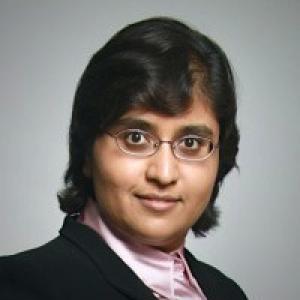
Dr. Anita Goel is the Founder, Chairman and Scientific Director of Nanobiosym, an innovation engine and hi-tech incubator at the convergence of physics, nanotechnology and biomedicine, and CEO of Nanobiosym Diagnostics to commercialize the Gene-RADAR technology platform to empower people worldwide with rapid, portable diagnostic information about their own health.
MIT Technology Review Magazine named her one of the world’s “Top 35 Science and Technology Innovators”. Invited by Senator John Kerry to help reauthorize $1.5B for the U.S. National Nanotechnology Initiative, Dr. Goel is also spearheading an initiative to build a Nanobiosym innovation ecosystem in India to sustainably bring emerging technologies into emerging markets.
Untold Story
Anita grew up in the rural South, where black and white people lived on different sides of the railroad. She spent time meditating in nature and reading the Vedanta in the midst of backyard pets: chickens and peacocks. From the age of 8, she would “scrub in” on her dad’s operations.
Selected articles:
“Harnessing Biological Motors to Engineer Systems for Nanoscale Transport and Assembly” in Nature Nanotechnology.
“Molecular Evolution: a role for quantum mechanics in the dynamics of molecular machines that read DNA,” in the book Quantum Aspects of Life
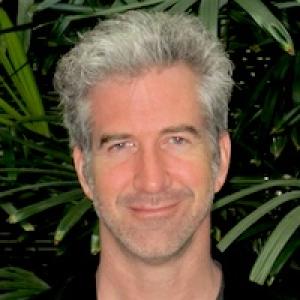
Responsible for strategic planning and game-creation at Multiverse, Corey is helping build a network of interactive entertainment, which includes casual games, Massively Multiplayer Online Games (MMOGs), and 3D virtual worlds. Over the past year, Corey has overseen development of games for McDonald’s and Coca-Cola, as well as the ground-breaking “Battle: Realms at War,” the world’s most extensive web-based MMOG.
Corey brings experience from some of the most influential companies in the high-tech and entertainment industries, including Netscape, Netflix, Zone Labs, Borland, and The Discovery Channel. In 2003, he was invited to contribute to a U.S. Homeland Security task force on Cyber Security.
Untold Story
Corey was the editor-in-chief of the campus humor magazine at the University of California at Berkeley. At the time, he was an entomology major. Realizing he preferred story-telling to bugs, he switched majors to English. Now in high-tech, he’s once again surrounded by bugs. Go figure.
Website: www.multiverse.net

New York Times bestselling author Deepak Chopra is acknowledged as one of the world’s greatest leaders in the field of mind body medicine.
He is the Founder and Chairman of the Chopra Foundation, Founder and co-Chairman of the Chopra Center for Wellbeing in Carlsbad, California and a Gallup Senior Scientist.
He regularly mentors corporate and political leaders through his “Soul of Leadership” workshops. Chopra is the recipient of the 2010 Goi Peace Award and numerous other international awards. Time Magazine heralds Deepak Chopra as one of the top 100 heroes and icons of the century, and credits him as “the poet-prophet of alternative medicine.”
UNTOLD STORY: In 2010, Deepak spent two weeks of silent retreat in Thailand as an ordained Buddhist monk, which included begging for food with a begging bowl and understanding and embracing impermanence and awareness of one’s own death.
BOOKS: Reinventing the Body, Resurrecting the Soul; Chopra has written more than 55 books. His books have been translated into 35 languages and sold more than 20 million copies worldwide.
WEBSITE: http://deepakchopra.com

Dinh Thi Hoa grew-up in communist North Vietnam during the Vietnam War. She went to university in Moscow and later returned to Vietnam to join the Foreign Service of the Vietnamese government. In 1990, she was chosen as the first Vietnamese to receive the World Bank scholarship to study at Harvard Business School. She returned to Vietnam in 1994. Hoa has been nicknamed “a serial entrepreneur” because she is the founder/manager of number of successful businesses in Vietnam, including Galaxy, the Paris Deli cafe chain, and Thienviet Securities among several others. She also supports education and art non-profit projects.
Untold Story
Hoa escaped all the atrocities of Vietnam War and had the fortune to study in the former USSR and the US. She came back to Vietnam in 1994 and since then has been trying to bring new ideas to help rebuild her country.
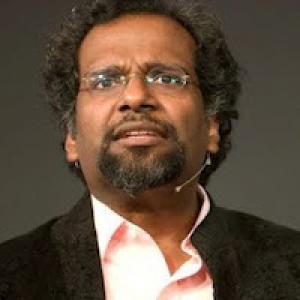
He was a speaker at the inaugural INK conference in 2010 and was thrilled by the array of inspiring, creative, humble, brilliant, warm, friendly people who are brought together at INK.

A social psychologist and marketer, Jennifer Aaker is the General Atlantic Professor of Marketing at Stanford University’s Graduate School of Business. She is widely published in the leading scholarly journals in psychology and marketing, and her work has been featured in a variety of media, including The Economist, NYTimes, WSJ, Washington Post, BusinessWeek, Forbes, and Science. A sought-after teacher in the field of marketing, Professor Aaker teaches courses, including ‘Designing Happiness’, ‘How to Tell a Story’, ‘Building Innovative Brands’, and ‘The Power of Social Technology’.
UNTOLD STORY: Jennifer, 19, was a patron at a Boston nightclub, when defending her friend from an aggressive dancer, she suddenly found herself in a dance-off. Jennifer both saved her friend and won said dance-off and now remembers the ‘80s fondly.
BOOKS: The Dragonfly Effect
WEBSITE: faculty-gsb.stanford.edu; dragonflyeffect.com

Joichi Ito is the Director of the MIT Media Lab. He is the Chair of Creative Commons, on the Board of The New York Times Company, on the Board of the MacArthur Foundation, on the Board of Trustees of The Knight Foundation, and co-founder and board member of Digital Garage an Internet company in Japan. He is on board of a number of non-profit organizations including The Mozilla Foundation and WITNESS. He is a member of the IT Strategic Headquarters of the Japanese Cabinet. He has created numerous Internet companies including PSINet Japan, Digital Garage and Infoseek Japan and was an early stage investor in Twitter, Six Apart, Wikia, Flickr, Last.fm, Kongregate, Fotonauts/Fotopedia, Kickstarter, Path, Pinwheel and other Internet companies.
He is the Guild Custodian of the World of Warcraft guild, We Know (http://weknow.to/). He is a PADI IDC Staff Instructor, an Emergency First Responder Instructor and a Divers Alert Network (DAN) Instructor Trainer. Ito was named by Businessweek as one of the 25 Most Influential People on the Web in 2008. In 2011, Ito was chosen by Nikkei Business as one of the 100 most influential people for the future of Japan and by Foreign Policy Magazine as one of the “Top 100 Global Thinkers”. In 2011, he received the Lifetime Achievement Award from the Oxford Internet Institute in recognition of his role as one of the world’s leading advocates of Internet freedom.

Leonie Casanova is a London-based singer and songwriter. Born and raised in Zambia to an Italian father and Zambian mother, and schooled in Swaziland, England and the USA where she studied Economics and French Literature, Leonie�s colourful and almost nomadic background has deeply informed her approach to songwriting and to the intrinsic and essential story-telling element of this process. Leonie crosses and fuses genres and musical textures fluidly which allows exploration of what she calls �an endless work playground�.
UNTOLD STORY: Leonie thinks her obsession with mangoes and her ability to sit and �observe the world� may have something to do with days spent climbing and sitting on mango trees as a child in Zambia!

Dr. Luis Dias is a physician, musician, and founder of Child’s Play India Foundation, a charity which works to bring classical music to underprivileged children in India. Child’s Play india Foundation is inspired by El Sistema, a Venezuelan initiative that promotes the collective practice of music and music education as a means of social change and empowerment. The creation of Child’s Play India Foundation was triggered by the stupendous performances of two orchestras, both made up of underprivileged youth from separate corners of the globe, at London’s Royal Albert Hall in 2007.
Luis has been in the medical profession for two decades, spanning the UK and India. He has performed in many orchestras, ensembles and chamber groups, including the Corinthian Chamber Orchestra in London and the Bombay Chamber Orchestra.
Untold story
Luis’ house was once a Mint. However, thorough searches by him have not yielded any hidden cache of coins (yet).
Website: www.childsplayindia.org

Lynda Barry has worked as a painter, cartoonist, writer, illustrator, playwright, editor, commentator and teacher and found they are very much alike.
She is the inimitable creator behind Ernie Pook’s Comeek featuring the incomparable Marlys and Freddy. The Good Times are Killing Me was adapted as an off-Broadway play and won the Washington State Governor’s Award. Her bestselling and acclaimed book, the creative writing how to/graphic novel/memoir What It Is, won the Eisner Award for Best Reality Based Graphic Novel and R.R. Donnelly Award for highest literary achievement by a Wisconsin author. Lynda recently created the companion how to draw/graphic novel/memoir PICTURE THIS. In both, Lynda explores the depths of the inner and outer realms of creation and imagination, where play can be serious, monsters have purpose, and not knowing is an answer unto itself.
BOOKS: Picture This, What It Is, One! Hundred! Demons!, The! Greatest! of! Marlys!, Cruddy: An Illustrated Novel, Naked Ladies! Naked Ladies! Naked Ladies!, and The Good Times are Killing Me

Mami is a well-known singer in Mizoram. Her debut album, Damlai Par, released in 2007, was rated as the top selling album of the year and led to a hat-trick of awards at the Mizoram Music Awards; Best Female Singer, Best Music Video and Song of the Year for the title track. Her following three singles reached the top 10 leading to another prestigious MMA in 2008. Mami recently released her new music video Hmangaihna Vanduai Maw with her second album to follow next year.
UNTOLD STORY: I was recently invited to a school year function, I had a television appearance later on in the evening, so, feeling guilty, I made my excuses and left early, telling them to be sure to watch the telecast live on local cable that night. I got home, changed, did my make-up and waited to be collected, and waited, and waited… Eventually, I called them. The date was for the following week! I was totally embarrassed – the worst part is that when my mom got home – her advice was “Drink a glass of water and sleep on it!!”
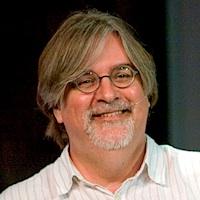
Matt Groening created the longest-running comedy in television history, The Simpsons. It exploded into a cultural phenomenon in 1990 and has remained one of the most groundbreaking and innovative entertainment franchises, recognizable throughout the world. He followed it with his creation of the hit sci-fi series FUTURAMA, currently one of the top rated shows on Comedy Central. As a cartoonist, Groening began his Life in Hell weekly comic strip series in the 1980’s which continues to this day in newspapers nationwide.
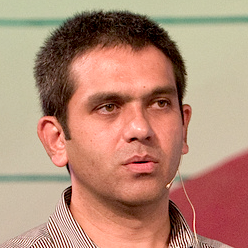
If Michael Foley’s behind a product, expect a technological marvel that is strong on both form and functionality.
Michael Foley first made his mark with stunning designs that gave a contemporary makeover to Titan Industries. He joined Titan Industries in 1995 as a product design intern, grew to head the Titan Design Studio in less than a decade, and later became Titan’s Chief Creative Advisor. Michael’s design experience ranges from wrist watches, sunglasses, and fashion jewelry to retail design and visual merchandising. In 2006, Michael felt the need to take design on to an even bigger platform and the studio – ‘Foley Designs’ – was incorporated with specializations in product design, packaging, graphics, space design, brand identity and more. ‘Intuitive design’ is a focus for the studio.
Untold Story
Michael draws an innate association to the purity and wonder of nature. The implicit simplicity, with which natural entities are created, inspires him infinitely.
BOOKS: A compilation across books on the creations of Leonardo da Vinci
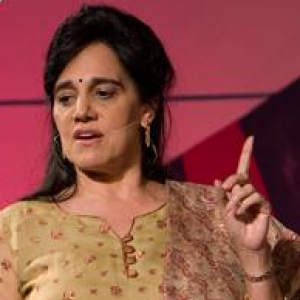
Dr. Mussaret Zaidi heads the research laboratory at the Hospital Regional de Alta Especialidad in Yucatan, Mexico. During the last decade, she has studied anti-microbial usage in animals and the human health impact of anti-microbial-resistant bacteria in the food chain and environment.
Mussaret specialized in Pediatrics in Mexico, and completed a fellowship in Clinical and Public Health Microbiology at Mount Sinai and a MSc in Infectious Diseases at LSHTM. She is an advisor for the WHO Advisory Group on Integrated Surveillance of Antimicrobial Resistance.
Her recent research focuses on the control of food-borne diseases, food production and distribution, and community well-being in highly endemic settings.
UNTOLD STORY: My ancestors moved from Iraq to India in 990 AD. Throughout centuries, the Zaidi clan has been committed to social justice. A staunch believer in the family legacy, the goals of my own work are greater opportunities for children and their communities worldwide.
BOOKS: “A perspective on the role of pulsed-field gel electrophoresis for Salmonella surveillance in Mexico� in Calva JJ, Calva E (Eds): Molecular biology and molecular epidemiology of Salmonella infections. Research Signpost, Kerala, India. 2009

Since 1988, Nancy Duarte’s firm has created over a quarter of a million presentations. As one of the largest woman-owned businesses in Silicon Valley, her experience working with global companies and thought leaders has influenced the perception of some of the world’s most valuable brands and many of humanity’s common causes. Fascinated by presentations as the most powerful persuasive medium, Duarte determined to crack the code on why some presentations are riveting and others are unbearable. In Fall 2010 she released Resonate—Present Visual Stories that Transform Audiences which identifies hidden story structures inherent in great communication.
Untold Story
Nancy does her best thinking about 40 minutes in to a demanding 3-hour hike in the foothills of the Silicon Valley. At the summit, she sits on a bench and gushes over the valley because it has been like the land of milk and honey for her.
BOOKS: Slide:ology, Resonate
WEBSITE:www.duarte.com

“I like to open the doors to people’s brain.”
Philippe Starck is an internationally acclaimed French creator, designer and architect. This tireless and rebellious citizen of the world, who considers his duty to share his ethical and subversive vision of a fairer world, creates unconventional objects whose purpose is to be ‘good’ before being beautiful. Most of his designs have become cult objects and his hotels have become timeless icons, adding a new dimension to the global cityscape.
Being an enthusiastic advocate of sustainability, this visionnaire recently developed the revolutionary concept of ‘democratic ecology’ by creating affordable wind turbines for the home, soon to be followed by innovative prefab ecological wooden houses and solar boats.
Untold Story
He lives with his wife Jasmine, mostly on the airplane and in Paris, Burano and his oyster farm in southwest of France.
WEBSITE: www.starck.com
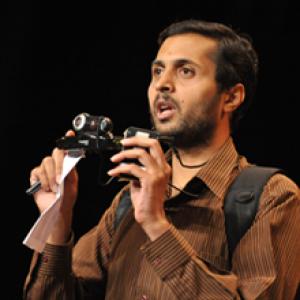
A software architect at Wipro Technologies, Bangalore, with geek credentials going back two decades, Ramachandra Budihal drew from his work in digital image processing and multimedia to co-found the Mahabharata Samshodhana Pratishthanam (Mahabharata Research Foundation), a non-profit organisation on a mission to digitize and protect works of Indian heritage and make them relevant to the contemporary society.
One of the foundation’s projects focuses on the Mahabharata, India’s most famous epic. Budihal is helping develop and compile an encyclopedia of the Mahabharata – 18 volumes – that’s set to debut in 2012. With the foundation, he also devised and built Samanveshak, a digital document-scanning laboratory housed in a bus with state-of-the-art scanners, satcoms and telepresence. To date, the team has digitised and documented more than one million folios of ancient medical manuscripts from remote areas in Tamil Nadu and Kerala.
Ramachandra is also recepient of a presidential honour, ‘Maharishi Badrayan Vyas Samman’ (2007), conferred by then President of India Dr Abdul Kalam, in recognition of his breakthrough work in the area of cultural heritage preservation and promotion using technology.
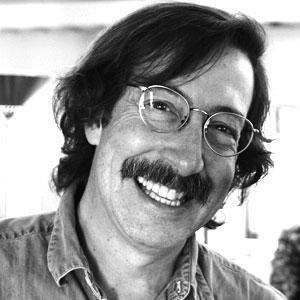
Rick Smolan is a former TIME, LIFE and National Geographic photographer best known as the co-creator of the “Day in the Life” book series. He is currently CEO of Against All Odds Productions, a cross-media organization which utilizes the skills of hundreds of the world’s leading photographers, writers, filmmakers, designers and programmers to merge creative storytelling with state-of-the-art technology. Rick’s global crowd-sourced photography projects combine creative storytelling with state-of-the-art technology and have generated hundreds of millions of media impressions and have been featured on the covers of Fortune, Time, and Newsweek.

Rives is a poet and multi-media artist from Los Angeles, who applies new technologies to ancient art forms. He has appeared on Romanian billboards, in Scottish pubs and inside a 1964 Cadillac with a supermodel for the Bravo TV special Ironic Iconic America. He is the co-host of the annual TEDActive conference and his hobby is rooftops. Offstage, Rives designs and writes pop-up books. He has appeared on multiple seasons of HBO�s Def Poetry Jam and was a member of the Def Poetry international tour group.
Untold Story
I was kicked out of college for attending too long. I should have been kicked out for forging my high school transcript, but I never got caught.

Sandy Smolan is an award-winning director whose work spans features, documentaries and television. His debut feature film Rachel River was nominated for the Grand Jury Prize at Sundance. 12 Stones, his documentary about the transformation of a group of illiterate women in Southern Nepal, won the jury Prize in 2009 for Best Short Documentary at the Tallahassee and Newport Beach Film Festivals.
Smolan has directed over 50 hours of network prime-time television series, including Brothers& Sisters, Ally Mcbeal, and Northern Exposure. He has begun using the web for both corporate branding and social advocacy, directing the original web series “In Gayle We Trust” and “First Day”, and films about sustainable development for the Gates Foundation.
Untold Story
Sandy directed his first documentary in North Africa. Although robbed of all his film and cameras (later recovered) the night of his 21st birthday, the experience kindled a deep love of travelling which remains undiminished.
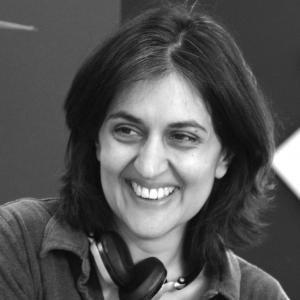
British writer and director Shamim Sarif is an award-winning novelist, screenwriter, and feature film director. She has published three novels and one non-fiction book and has written and directed three feature films and a documentary.
Shamim recently completed Despite the Falling Snow, which had its market premiere at Cannes in May 2015. The movie stars Rebecca Ferguson (Mission Impossible 5 and The White Queen) and Charles Dance and is an epic story of love and betrayal in cold war Russia based on her second novel, published by Hodder Headline and St Martins Press to universal acclaim.
Her first feature film ‘I Can’t Think Straight’ won 11 awards and is currently under option with Aaron Kaplan of Kapital Entertainment for development as a TV series in the US. Her follow up movie ‘The World Unseen’ had its debut at the prestigious Toronto Film Festival before going on to garner 23 awards internationally, including 11 SAFTAs (South African Film Awards). Her third film, a documentary called The House of Tomorrow, was shot on location in Israel and Palestine and had festival debuts in New York and Sarasota in 2012 and won its first award this year in France.
The World Unseen book won the Pendleton May First Novel Award, and then the prestigious Betty Trask Award. It was selected for inclusion at all the major UK book festivals, including Hay-on-Wye, Cheltenham and Edinburgh and sold out of its initial print runs.
Shamim is currently completing the screenplay for her latest project, Hidden Agenda, an intelligent action thriller with female protagonists, based on her own forthcoming book. She is also developing the concept as a TV series with Left Bank Pictures.

Folk music is rapidly disappearing from mainstream music, but never fear! Shantanu Moitra is a man on a mission to save folk musical traditions. Shantanu is a renowned Indian music composer and restorationist. With a father as an accomplished sarod player and his mother as a talented artist, creativity naturally runs through his veins. He has worked on many landmark Bollywood films, including “Parineeta”, “3 Idiots”, and “Madras Cafe”.
In 2014, he received the National Film Award for Best Music Direction (Background Score) for Na Bangaaru Talli. With his compositions and exploration of lost musical traditions, Shantanu constantly contributes to what he strongly believes is the best way to “see” a country — by experiencing its music

Simon Lewis is a film and television producer and author. After earning law degrees from Christ’s College Cambridge and Boalt Hall, Berkeley, Lewis moved to Los Angeles where his Hollywood experience includes managing writers, directors and stars as well as producing Look Who’s Talking (1989), The Chocolate War (1988), the Emmy award-winning international co-production for HBO and ITV Central Age Old Friends/A Month of Sundays (1988), and variety specials starring Howie Mandel.
He is the author of Rise and Shine (June 2010), his inspirational autobiography about his journey from near death back to consciousness.
UNTOLD STORY: Simon attributes his belief that life is best lived at the cutting edge to a Swiss friend who showed him how to ski the yellow mogul runs at Zermatt, and achieve balance on the edge of a cliff. He’s been taking creative risks and leaning out over precipices ever since.
BOOKS: Rise and Shine
WEBSITE: www.simonlewis.us; www.riseandshinethebook.com
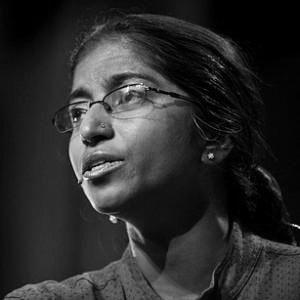
Sunitha Krishnan, Founder and Director of Prajwala, or “an eternal flame”, is an eminent anti-trafficking activist internationally known for her fight against girl child trafficking for the purposes of commercial sexual exploitation. A mental health professional, she has done extensive research and is essentially a field practitioner. Prajwala runs 17 schools throughout Andhra Pradesh, India, for 6,000 children and has rescued more than 4,200 women from prostitution, 2,100 of whom Krishnan personally liberated.
Sunitha has sparked India’s anti-trafficking movement by coordinating government, corporations and NGOs. She forged NGO-corporate partnerships with various companies to find jobs for rehabilitated women. Krishnan works closely with the Indian government to define anti-trafficking policy, and her recommendations for rehabilitating sex victims have been passed into state legislations

Tom Wujec is a pioneer in business visualization, the emerging practice of using images, sketches and data-driven infographics to help teams solve complex problems. Tom�s work has been featured in many international conferences, such as TED, Pop!Tech and the Fortune Innovation Summit. Tom is also the author of three books on creative thinking and is a highly sought after international speaker, delivering visually rich innovation keynotes, workshops and knowledge maps. He has brought several software applications to market, including Autodesk SketchBook Pro, PortfolioWall, and Maya which won an Academy Award for its contribution to the film industry. Tom has worked as a creative director, writer and animator, has designed dozens of museum exhibits, and lives in Toronto with his wife and two children.
BOOKS: Five Star Mind, Pumping Ions, Return on Imagination
WEBSITE: www.tomwujec.com

Prior to forming Emotiv, Nam Do co-founded and ran SASme, a pioneer in providing SMPP platforms to telecommunication carriers and content aggregators in Australia and Asia. In 1995, Nam won one of Vietnams most prestigious study abroad scholarships. Nam came to Australias RMIT University under a full merit scholarship, and started his first technology company in his final year. A regular guest-lecturer at Harvard Business School, HAAS Business School and Stanford University, in 2007, Nam was voted as one of Australias Top 10 Digital Entrepreneurs.
UNTOLD STORY: In 2003, Nam Do had dinner with Professor Allan Snyder FRS. They discussed at length about Allans work on non-conscious mind with autistic savants. At 4am, Nam told Allan, you know what, the last 20 years have been the era for DSP (digital signal processing), the next 20 years will be the era for ESP (emotional signal processing). Allan loved it and thats how Emotiv was formed.