




























Heena Patel from Talavya writes about “Getting INKed”

When we received the invitation to speak /perform at the INK conference 2011 (formerly TEDIndia), there was no question about accepting.  Several of us had been following both INK and TED for some time now and we were more than happy to be apart of the experience.

However, after accepting the invitation, we were faced with a dilemma.  What would we perform? For those not familiar with the INK and TED formats, each speaker is given a maximum of 18 minutes. 18 minutes to share your ideas, your work. Unlike most bands, Talavya does not have individual songs, we perform a group tabla composition which is about an hour in playing length without any breaks or speaking.

Talavya performing at the INK conference 2011 in Jaipur. From L to R: Kaumil Shah, Rahul Shrimali, Rushi Vakil, Sahil Patel and Heena Patel. Photo credit : Varsha Yeshwant Kumar

So what would we perform?

The obvious answer would be one segment of Tabla Ecstasy (the composition we currently perform). After all, Tabla Ecstasy is divided into four parts based on speed and each segment is between 7 to 18 minutes in length. It would be easy to speak for a minute or two and then perform a section of the composition. However, this would not reflect one of the primary purposes of Talavya – to showcase the depth and breadth of classical tabla playing. Tabla Ecstasy and all of the previous works of Talavya follow the format of a classical tabla solo performance. Playing one segment would only highlight one aspect of the instrument as each section is comprised of one or two types of tabla compositions.

It was not as if this was the first time we would be performing something less than the entire composition, but just minimal time allocation for an Indian classical music performance is largely unheard of. Thankfully, the INK team were agreeable to give us the maximum time possible of 18 minutes, but this still presented a challenge. The shortest length we’ve played was 25 minutes – a time length that left little room for explanations, but included the more serious and light-hearted aspects of the composition. Going back to the composition with scissors was not an option as it could not be furthered shortened while keeping its essence intact. Our work had to be reframed.

But how would this be done?

The beauty of Talavya and the work we perform is that our compositions are living compositions, in that, they are continually modified. Our composer and guru, Pandit Divyang Vakil (fondly known as “Guruji”), is always making changes to what is known as Tabla Ecstasy based on our inputs, improvements in playing, etc. A few months ago prior to the INK invitation, Guruji had created a new experimental piece for Talavya that brought together world rhythm patterns and Indian classical rhythms.This work was compositionally presented in a different manner than previous works and provided an ideal framework for an INK talk. Using the base compositions (ie. specific kaidas, relas,) of Tabla Ecstasy, Guruji recomposed Tabla Ecstasy to 14 minutes, leaving a couple of minutes to share the idea behind the work (given that it is the INK conference) and technical explanation (which we feel is integral to a Talavya performance). Ultimately, the performance segment incorporated three segments of Tabla Ecstasy (slow, medium and very fast tempo) and multiple types of compositions. Our objective was achieved – to showcase the breadth and depth of classical tabla and that too within the INK time limit, which you must believe us when we say is no small thing from the perspective of an Indian classical musician.

By Heena Patel 

Talavya

Tabla Ecstasy Album Cover

Follow Talavya as they journey around the world sharing the art of tabla by joining their facebook page at www.facebook.com/talavyatabla and /or signing up on their mailing list at talavya.fanbridge.com.
Talavya is soon releasing their album Tabla Ecstasy that comes with free downloads and more.


Fellows Insights: Quality of Thought by Dina Buchbinder Auron

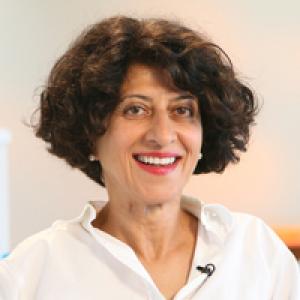
Dina Buchbinder Auron speaking at INK2011

Have you ever thought about the concept, “quality of thought”? For a long time now, I have been thinking about this concept. I think sometimes we are so used to complaining about all kinds of problems and challenges we face. The thing is, there is so much to do that we cannot afford to spend time complaining. It is right to be worried, but only so long as you do something about your worries.

When I was immersed in the INK experience I was able to confirm that these unique four days allows people to have the highest quality of thought. I was thinking that every person has the potential to be a hero; every person has amazing, breathtaking, inspiring stories to tell. If you ask me, having a better/higher quality of thought is one of the unevident things that would change this world.

This is what I felt at INK, a call to action through inspiration and admiration from the people attending this wonderful space that is filled with “anonymous heroes” from all over the world, willing to share and learn non-stop during four very nurturing days. At INK our “quality of thought” rises significantly because, instead of complaining, you are invited directly and indirectly to “change your chip”, to find another frame of reference that allows you to connect your thought to other actions that can actually contribute significantly from wherever you are. INK takes you to a state of mind where you can’t stay still waiting for something to happen. It touches the deepest fiber within each individual that is present. I could dare to state that everyone left there “not leaving” in the sense that today, four months after INK happened, our “quality of thought” has improved…

Dina immersed in conversation at INK2011

This marked not only my mind but also my soul. This resonates with me because it is what I do in life: teach children how to be better citizens, with better quality of thought that makes them change makers from those ages (6-12). I do this through Deport-es para Compartir (Sports for Sharing), an educational and civic program to teach children that they, along with all their potential, can have the best quality of thought. We translate the concept as thinking and acting upon the greater good.

Let me elaborate how. Children by nature love to laugh, play, interact and discover through their own language: games and sporting activities. Today we have inspired 45,000 children from diverse backgrounds in Mexico. My team and I dream of inspiring all children in Mexico and the world. We have observed that during and after Deport-es para Compartir (Sports for Sharing) children not only have a higher quality of thought and actions, but they also transmit this to their teachers, parents and all of their communities. In each DpC session children travel using their imagination (the power of the journey) to different, fascinating far away countries and identify similarities and new interesting facts to learn and appreciate cultural differences.

Children are all the hope we need in this world. Because of their potential, and if we give them the right tools in a meaningful way, they can develop the highest quality of thought and therefore invest time, effort, energy and passion into making this a better world for everyone from today.

We are currently working to systematize Deport-es para Compartir in order to share it with many countries and multiply the “quality of thought effect”…

Thank you INK for inviting people to have better quality of thought!!

By Dina Buchbinder Auron

INK Fellow and Director of Deport-es para Compartir

April 23, 2012

Why INK?

Why do I work at INK?

As a non-Indian, this is actually a pretty relevant question. I have no Indian relatives by marriage, and before starting work at INK, I’d never even visited the country. As the only blonde-haired and freckled member of the INK team, when I tell people I work for an Indian company, the usual response I get is some joke about reverse outsourcing.

When I think about why I work for INK, I dream big. I dream globally. I think about the role of INK and the future of this company in the next five years. INK is by and for India, and INK’s thought-leaders are India’s global face to the world. I see INK as the trend predictor of India’s future, a pre-release sneak preview, if you will, that we’re lucky enough to see today.

INK is the rural innovator, talking about a homegrown innovation that transformed a village. INK is the business leader, offering insights on India’s position relative to a global product line. INK is the young artist, spinning an entirely unique mélange of culture old and new to create a provocative statement about a nation’s identity. And INK is the seasoned veteran, looking back on a lifetime of lessons learned and prospecting on the state of future change.

So I was thinking about all these things when crafting a new mission statement for the company, and how all of them brew together to form our unique identity. And here is what I came up with:

How does the future unfold, and what drives it? At INK we know that tomorrow is shaped today by visionary men and women. That’s why we are committed to capturing and sharing the best breakthrough ideas, inspiring stories and surprising perspectives. Watch INKtalks and meet the people who are designing the future–now.

INK is forward-looking, using intimate narratives by thought-leaders to understand the future direction we’re all headed. By sharing great ideas, stories and perspectives, in a format that’s quick, easy and enjoyable to understand, INK is enabling everyone—anywhere—to drink from the fountain of knowledge.

By Nina Gannes, INK Head Writer

April 3, 2012

Talking to Itay Talgam

I’ve always wanted to be a leader. I think most people would agree. That word has an appealing zing to it. Nina Gannes: Leader of…it almost doesn’t matter what comes next. Almost no noun is as equally coveted in the English language.

Which is why, at some point over the course of your life, I’m sure you’ve asked yourself the question: “How do I become a better leader?” Are you nodding your head, yes? Good. Once you’ve realized that you really don’t know where to start, the follow-up question is “Who the heck can tell me what I need to know?”

In comes INK2011 Speaker Itay Talgam. Talgam uses the orchestra—yes, the classical music kind of orchestra—as a metaphor for business organizational leadership. Let me explain a little.

The only way an orchestra will sound good is if every member is attuned to a clear plan (i.e., the musical score) and the conductor’s vision to interpret that plan. It’s the conductor’s responsibility to connect the musician’s disparate musical statements to create a relevant flow of musical expression. And because each time the orchestra plays a piece the notes are uniquely expressed, the conductor must be always open to changing his perspectives and preconceptions about the directional flow the music might take. In essence, Talgam sees the job of the conductor as creating one storyline of an overarching interpretation of the music from the endless number of small choices the musicians are making each second about Mozart. Sounds a lot like shaping the complexities of business, don’t you think?

Talgam agrees with you exactly. And so by watching videos of expert conductors who are geniuses at crafting musical storylines, we can take tips on how to manage our businesses better. Every conductor has established a leadership style that clearly defines the boundaries of the expected relationship between conductor and orchestra. They could be leading from within—or leading from without. The conductor establishes rules and expectations about the type of control he will assume, and within those guidelines he creates space for the musicians to listen and react to one another. The genius of the best conductors is that they don’t assume total control. By knowing when to step in—and when to step back—they create opportunities for the musicians to lead and interact with one another to create music that is more than the sum of its parts.

In essence, this is exactly the point of great leadership—to enable ideas to blossom. So to become a leader yourself, establish a culture of interactive dialogue, enable exponential collaboration to occur daily, make a coherent storyline of it all, and then get yourself season tickets to the New York Philharmonic.

By Nina Gannes, INK Staff

March  6, 2012

To watch Itay Talgam’s INKtalk, click here, or see below.